One day in Al-Balad, the old heart of Jeddah
A walking day in Al-Balad, Jeddah's UNESCO-listed old town: coral-stone houses, Nassif House, the souqs and the Corniche at sunset, with a route.
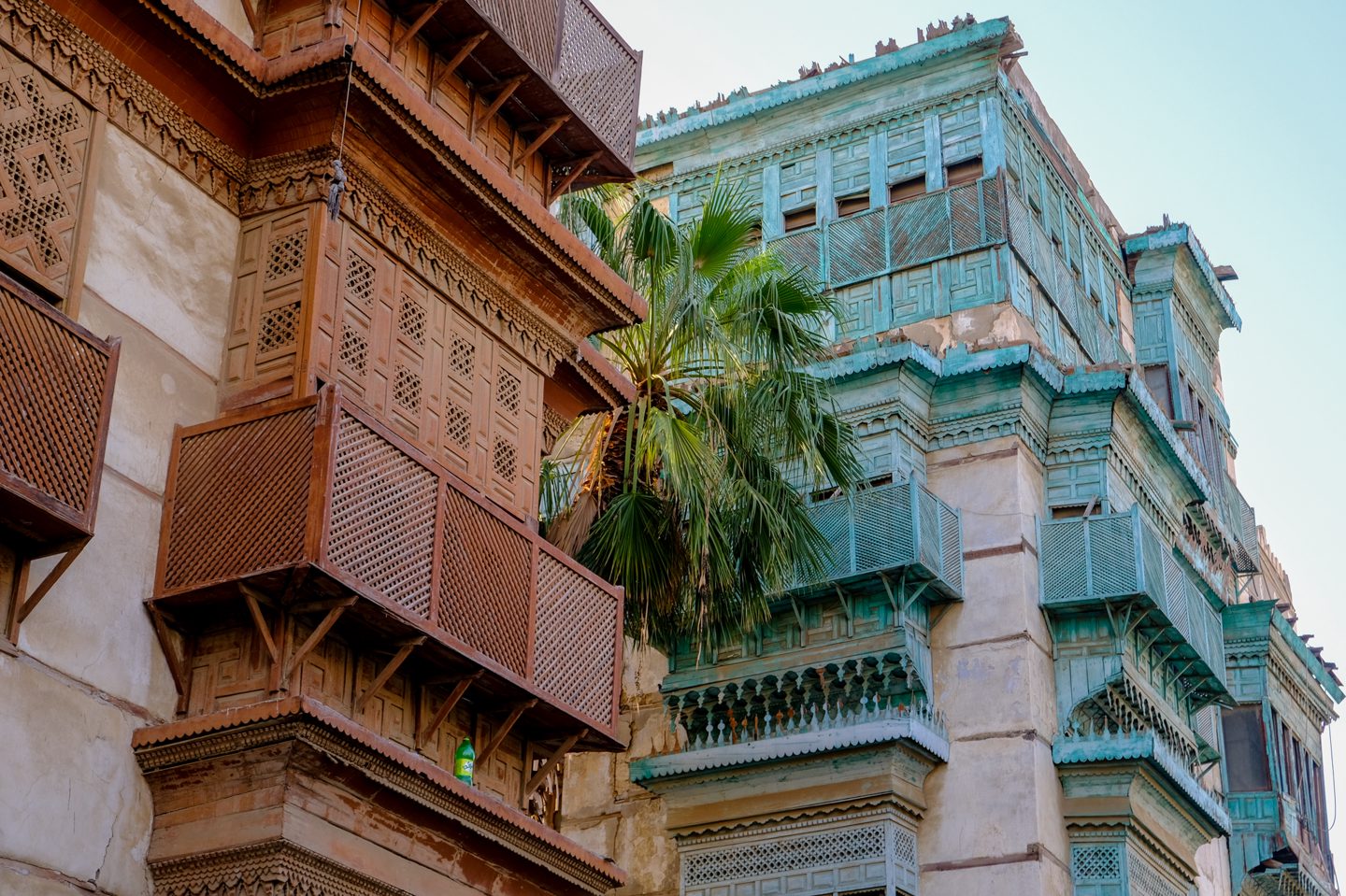
For more than a thousand years, pilgrims arriving by sea stepped ashore in Jeddah and passed through its old town on the way to Makkah. That town is Al-Balad. Its tall houses of coral stone, shaded by carved wooden balconies, are the reason UNESCO listed Historic Jeddah, the Gate to Makkah, as a World Heritage Site in 2014. Many pilgrims still land in Jeddah today. If you have a free day before or after Umrah, spend it here.
Why Al-Balad matters
Jeddah became the port of Makkah in the seventh century, and Al-Balad grew rich on pilgrims and on the Red Sea trade. Merchants built tower houses from blocks of coral stone cut from the reef, and fitted them with roshan — projecting wooden window screens that catch the sea breeze and keep the rooms private. Hundreds of these houses survive, and many are now being restored.
A walking route for one day
Late morning — start at Bab Makkah. The old gate marks the eastern edge of the walled town, on the road to Makkah. From here the street leads into the food and spice markets, busy with shoppers since the days when caravans left from this gate.
Midday — Nassif House. The best-known house in Al-Balad, finished in 1881 for a merchant family. King Abdulaziz stayed here when he entered Jeddah in 1925. Today it is a museum and cultural centre.
Afternoon — the old lanes. Walk Souq Al Alawi, the long market street that crosses the old town, and look up: the finest roshan are above eye level. Stop at Al-Shafi'i Mosque, the oldest in Jeddah, whose minaret dates from the thirteenth century. Museums, galleries and cafés have opened in restored houses along the way.
Evening — when Al-Balad wakes up. The old town is at its liveliest after sunset, when the heat drops and families come out to eat. Try street food such as balila and mutabbaq. Our Al-Balad evening walk takes you through the lanes and food stalls with a local guide.
Add the sea
Jeddah lives along its Corniche. A short taxi ride from Al-Balad, the waterfront has walking paths, sculptures and King Fahd's Fountain, whose jet of seawater is lit at night and can be seen across the city. If you have a second day, go north to Obhur for a snorkelling trip on the reef.
Practical tips
- When to go. November to March is the pleasant season. In summer, come after sunset; the afternoon is hot and humid.
- Fridays. Many shops stay closed until after the Friday prayer; the evening is busy.
- What to wear. Light, modest clothing and comfortable shoes, because the lanes are uneven. See what to wear in Saudi Arabia.
- Getting there. Al-Balad is about 30 to 40 minutes by car from King Abdulaziz International Airport. Use a taxi or a ride-hailing app.
- Where to stay. A few restored houses now take guests; most hotels are along the Corniche. Start with our Jeddah guide.
Common questions
Is Al-Balad worth visiting?
Yes. It is one of the best-preserved old towns on the Red Sea and a UNESCO World Heritage Site, and it costs nothing to walk around. Half a day is enough for the main streets; a full day lets you add a museum and the evening food stalls.
What is the best time to visit Al-Balad?
Late afternoon into the evening, between November and March. The light is good for photographs before sunset, and the markets and food stalls are busiest after dark.
How far is Al-Balad from Makkah?
About 80 kilometres, roughly an hour by road. The Haramain train from Jeddah's Al-Sulaymaniyah station reaches Makkah in about half an hour.